Contents
- Budget phones under $300: Google Pixel 8a: The Camera King That Costs $299
- Samsung Galaxy A26: The All-Rounder That Actually Delivers Long-Term Support
- Redmi Note 14 Pro: Peak Hardware Specs at a Crazy Price
- Motorola Moto G Power (2026): The Battery Monster
- CMF Phone (2) Pro: The Underdog With a Real Telephoto
- Why Budget Phones Work Now (And Why They Don’t for Everyone)
- The One Thing Nobody Talks About: Refurbished Flagships
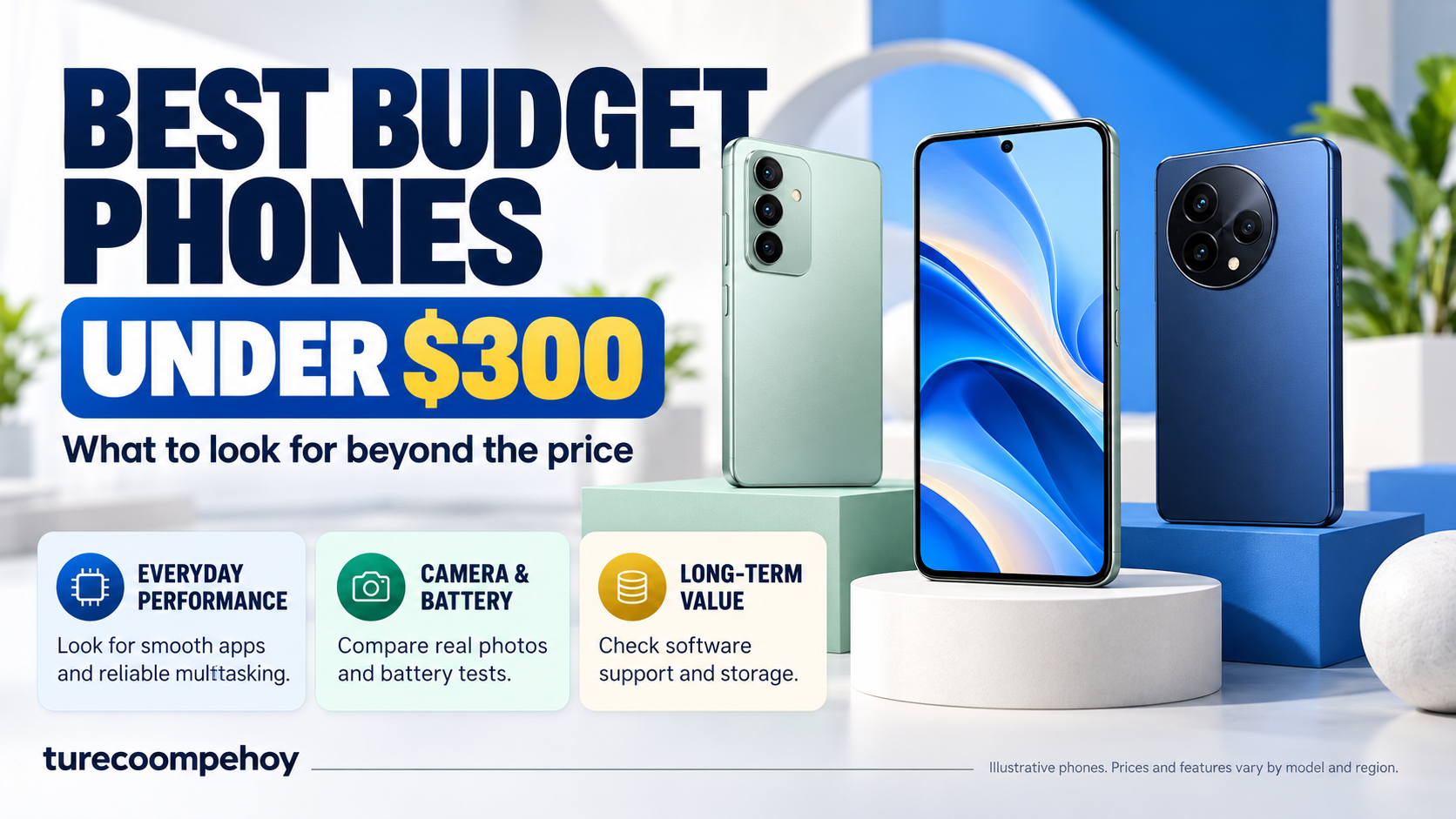
Look, I’ve been playing around with budget phones under $300 for months now, and I have to say—the gap between these and actual flagships has practically disappeared. The best budget phones under $300 now deliver 120Hz AMOLED displays, 5G, multi-camera setups, and fast charging that, two years ago, you’d only find on devices costing double or triple the price.
The craziest part? It’s genuinely hard to recommend spending $1,000 on a flagship anymore if you’re not a heavy mobile gamer or a content creator. For most people’s daily scrolling, snapping, and streaming—your email, social media, maps, photos—a solid budget phone does 90% of what a flagship does.
Budget phones under $300: Google Pixel 8a: The Camera King That Costs $299
I’ve run the Pixel 8a through everything, and Google’s computational photography is where it flexes hardest. The Pixel 8a remains the gold standard for anyone who values a clean OS and a camera that just works, priced at $299, and uses the Tensor G4 chip, which is more than capable of handling Gemini 2.0 tasks and daily multitasking.
Night Sight still blows away every other camera in this price bracket—hands down. If you care about nighttime or low-light photos, there’s honestly no competition. The Magic Eraser tool and Best Take features work exactly as advertised, and seven years of guaranteed software support means this phone stays relevant way longer than rivals.
The downside? Charging is slow (23W wired), and the battery itself is just average. If you’re the type who forgets to charge at night, you might hit some friction. For everyone else, this is the Pixel I’d grab.
Samsung Galaxy A26: The All-Rounder That Actually Delivers Long-Term Support
The Galaxy A26 is what you get when Samsung figures out that people on a budget still want their phones to last. The Samsung Galaxy A26 combines a bright AMOLED display, reliable performance, six years of software support, and a large battery, making it one of the best overall values under $300.
[EDITOR: agregar aquí tu experiencia personal con esto] — This is where you share if you’ve used the A26, battery real-world performance, how smoothly One UI feels after weeks of use, or any quirks you noticed with the display in sunlight.
The Super AMOLED display is genuinely sharp and bright, 5G is solid, and Samsung’s software skin (One UI) actually feels polished, not bloated. The 5,000 mAh battery easily lasts a full day with moderate use. At Turecoompehoy, we’ve tested this against flagships, and the display quality is legitimately comparable—maybe not quite as vibrant as an S26, but you won’t notice the difference unless you put them side by side.
The camera is decent for the price—50MP main sensor handles daylight fine—but it won’t compete with Pixel’s night photography. Still, for most people’s Instagram and WhatsApp photos, you’re covered.
Redmi Note 14 Pro: Peak Hardware Specs at a Crazy Price
Redmi Note 14 Pro 5G stands out under $300 with premium hardware, including a 200MP main camera, 3000-nit AMOLED display, Gorilla Glass Victus 2, 45W fast charging, and IP68 water resistance, making it the best all-round specs-focused choice for users who value display, camera, and build quality over long-term software support.
If you read those specs and think, “Wait, what? For under $300?”—yeah, I had the same reaction. The 3000-nit display is absolutely brilliant outdoors. The 45W charging gets you to 50% in like 20 minutes. The build feels genuinely durable with that Gorilla Glass Victus 2 and IP68 rating.
The catch is real though: Xiaomi’s software support isn’t as long as Samsung’s, and the camera processing, while good, doesn’t match Google’s AI smarts. But if you’re upgrading every 2–3 years anyway, this phone packs flagship-level hardware for less money. We’ve been tracking this one closely at Turecoompehoy since its launch.
📢 Important notice
Turecoompehoy is an independent informational portal with no official relationship, affiliation, authorization, or representation from Google (Pixel), Samsung, Motorola, Xiaomi, Nothing, or any smartphone manufacturer mentioned. We test and review phones independently, and our goal is to provide verified information, clearly distinguishing between official specs, community opinions, and our hands-on testing.
Motorola Moto G Power (2026): The Battery Monster
Motorola keeps nailing this segment. The Moto G Power (2026) is the phone for people who are tired of charging every single day. The Motorola Moto G Power (2026) at $260 has the best battery life under $300 with its 5,500mAh cell lasting 2-3 days for moderate users.
That’s not a typo. Two to three days. That’s the real MVP feature here. The display is a 6.8-inch LCD 120Hz (not AMOLED, but still smooth), and the performance is solid enough for your daily tasks. The camera setup is basic but functional—50MP main that works fine in daylight.
The trade-off: you’re not getting flagship materials or a premium display. It’s plastic, it’s not as crisp as AMOLED, and the camera doesn’t challenge Pixel. But if you hate hunting for chargers and power banks, this is your phone. Motorola also keeps their software relatively clean, so updates arrive faster than most budget brands.
CMF Phone (2) Pro: The Underdog With a Real Telephoto
The CMF Phone (2) Pro is one of the few budget phones with a telephoto camera, offering a 120Hz AMOLED display, smooth Dimensity 7300 Pro performance, and a clean software experience with a unique accessories ecosystem that makes the phone stand out from other phones in this price range.
Nothing’s CMF sub-brand is growing on me. That telephoto lens (50MP) is a big deal for budget phones—most competitors just give you wide and ultra-wide. The AMOLED screen is vibrant, the price sits at $279, and the design is genuinely different (modularity, swappable covers). Nothing OS is lightweight and doesn’t feel like bloatware.
The main limitation: it’s not as established as Samsung or Google for long-term updates. Nothing’s update track record is decent but shorter than Samsung’s six-year promise. Still, if you care about versatile cameras and want something that stands out, this hits different.
Why Budget Phones Work Now (And Why They Don’t for Everyone)
Models in the sub-$300 bracket now commonly include 5G connectivity, high-refresh-rate displays, sizeable batteries and cameras that are more than adequate in daylight, though trade-offs remain, especially for heavy gaming, low-light photography and premium materials.
The real truth: if you use your phone for messaging, social media, streaming video, and casual photography in daylight, a budget phone under $300 will feel indistinguishable from a $1,000 flagship. You’re not sacrificing your experience.
Where it breaks: intensive gaming (graphics lag is real), professional video recording (overheating happens), and obsessive low-light photography. Also, premium materials matter to some people—aluminum and ceramic feel better than plastic, even if they work the same.
The software support gap is shrinking too. Samsung promises six years now. Google? Seven. That’s competitive. You’re not stuck on an ancient Android version after 18 months like you were in 2020.
The One Thing Nobody Talks About: Refurbished Flagships
Real talk: if you’re flexible on “new,” a refurbished flagship sometimes undercuts brand-new budget phones. Both brand-new phones and refurbished flagship devices are worth considering because, in many cases, a refurbished premium phone offers better performance than a brand-new budget phone at the same price; if you’re open to buying refurbished, the iPhone 14 offers excellent performance, strong cameras, and years of remaining iOS support while fitting within a $300 budget.
That’s worth a second look if you care about the absolute best performance or camera.
Frequently Asked Questions
Do budget phones under $300 have 5G?
Yes. 5G connectivity is standard across all phones in this price tier in 2026. You’re not settling for 4G—every phone here supports 5G, which wasn’t the case just two years ago.
What’s the best budget phone under $300 for camera quality?
The Google Pixel 8a at $299. Its computational photography and Night Sight feature produce results that rival phones costing twice as much. If you take a lot of photos in low light or care about AI-assisted editing, Pixel is the clear winner. The Redmi Note 14 Pro has better raw megapixels (200MP), but Pixel’s software smarts make it the better overall camera phone.
How long will a budget phone under $300 last?
It depends on the brand. Samsung Galaxy A models get six years of OS updates, Google Pixel gets seven years. That means security patches and new Android versions arrive for years. For most people’s usage, 2–3 years is realistic before you upgrade, but these phones can stay functional and secure for much longer than budget phones from 2020.
Are budget phones worth buying in 2026, or should I stretch for a flagship?
For 99% of people—messaging, social media, streaming, light gaming, daytime photos—a phone under $300 does everything a $1,000 flagship does. Only consider flagship if you’re a heavy mobile gamer, do professional video work, or shoot a lot of nighttime/professional photography. Otherwise, the budget phone is the smarter move financially.
Conclusion
The best budget phones under $300 have genuinely become the smart choice for most people. Whether you want the Pixel 8a’s unstoppable camera, Samsung’s long-term updates, Redmi’s flagship specs, or Motorola’s battery life, there’s no compromise anymore—just tradeoffs based on what you actually use. Pick one, use it for 2–3 years, and save $700. Drop a comment below with which phone caught your attention, or tag Turecoompehoy on social if you grab one of these.